
By Cătălin Andrei Bora · Founder, re:solved
AI agents vs. chatbots: the difference between answering and acting
A chatbot waits to be asked. An AI agent acts on its own. Here are the technical and operational differences — and when it's worth moving from one to the other.
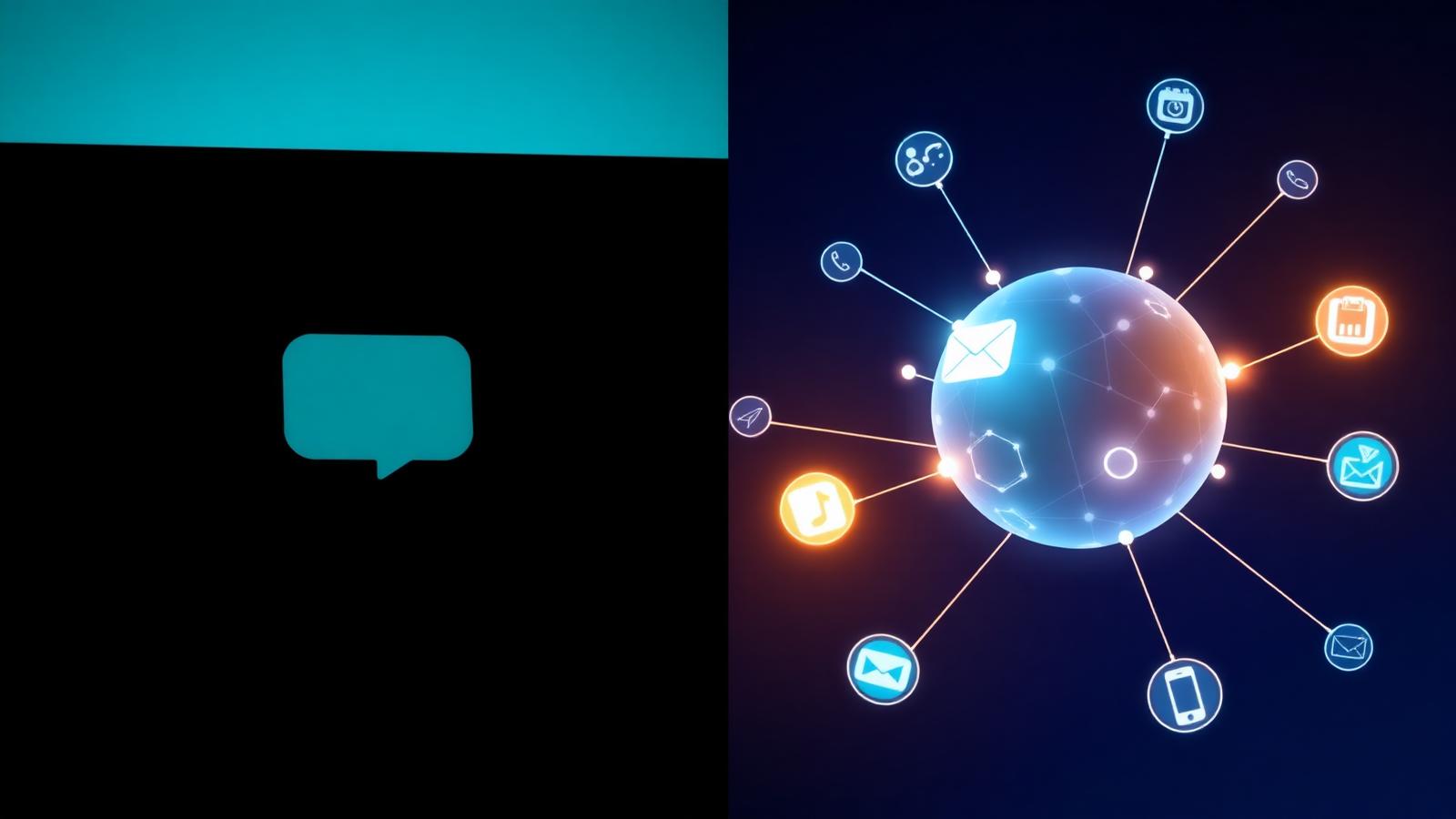
Almost every business website has had a chatbot in the corner at some point. Most were quietly disabled after a few months. The reason is simple: a chatbot answers. It doesn't resolve. An AI agent does the opposite — it takes on the task and carries it through, without waiting to be asked.
If you're looking at the automation in your business and wondering whether "already having a chatbot" means "already having an AI agent", the short answer is no. This guide walks through why, in operational terms — not technical ones.
The definitions, without the jargon
A chatbot is a conversational form. It waits for someone to write in, replies from a set of rules or a language model, and stops when the conversation ends. It doesn't open a booking on its own, doesn't send an email on its own, doesn't win back a lapsed customer on its own.
An AI agent is software with agency: it has a goal, it has tools (calendar, CRM, WhatsApp, email, database), and it decides for itself which steps to take to reach the goal. It can start without anyone messaging it. It can work in parallel with your team. It only stops when the task is done or when it needs a human decision.
The difference isn't in the quality of the reply. It's in the type of system.
Operational comparison
| Dimension | Classic chatbot | AI agent |
|---|---|---|
| Initiative | Reactive — waits for the question | Proactive — starts on an event, schedule, or goal |
| Scope of action | Text in the chat window | Real actions: bookings, emails, CRM updates, API calls |
| Memory | Usually per session | Persistent across sessions and channels |
| Tools | None or minimal (static FAQ) | Connected to your stack (calendar, inbox, CRM, WhatsApp, database) |
| What it delivers | An answer | An outcome (appointment booked, lead qualified, follow-up sent) |
| Biggest cost | The lost traffic that never asks anything | Initial setup and ongoing monitoring |
Why chatbots let most businesses down
Classic chatbots were sold as a way to "reduce support volume". In practice, most worked like a more annoying FAQ: if the visitor happened to ask something the bot knew, they got an answer; if not, they were pushed to a form. Either way, the actual work — booking, quoting, following up — stayed in the team's inbox.
The problem wasn't the LLM under the hood. It was the architecture: a system that only answers can only shrink one category of work (repetitive questions). It can't touch the hard part — execution.
What "agency" means in practice
An AI agent has three things a chatbot doesn't: a goal, tools it can act with, and the right to decide when and how to use them.
- Goal: "win back customers who've been inactive for six months" — not "answer questions about opening hours".
- Tools: access to the CRM so it knows who's inactive, to WhatsApp/email to reach out, to the calendar to propose a time.
- Autonomy: it decides the order, when to wait, when to escalate to a human.
A chatbot has none of those three. That's why it can't replace an hour of operational work — it can only shorten a conversation.
When a chatbot is enough
Honestly: if your only problem is that people keep asking the same thing (hours, address, return policy) and you don't want someone answering manually, a well-built chatbot is enough. It's cheap, quick to configure, and it solves exactly that slice.
But if the problem is "we lose leads after hours", "nobody does follow-up", "the lapsed-customer list sits untouched" or "bookings are handled manually all day" — a chatbot won't help. That's work, not questions. You need an agent.
What the shift from chatbot to agent actually looks like
In most of the projects we run, we don't replace the chatbot — we absorb it. The bot stays as the conversational layer (where the customer speaks), and the agent becomes the layer that executes: it picks up intent from the conversation, calls the right tools, closes the loop, and replies back in the same thread. To the user, it still looks like "a chat". To the business, it's the difference between "we got a question" and "we made a booking".
A chatbot tells you what someone on the team could do. An agent does it.
How to decide which one you need
- What happens after the conversation ends? If the answer is "someone on the team has to do something", you need an agent.
- Can the work you want off your plate be triggered without anyone opening the chat? (E.g. "contact inactive customers on Monday morning.") If yes, that's agent territory — a chatbot doesn't start on its own.
- Do you need the system to reach into other tools (CRM, calendar, email, WhatsApp)? Chatbots can make simple requests, but real orchestration is agent territory.
Want to see which one fits you?
Book a free 30-minute audit. We'll look at where time is leaking in your business and tell you honestly whether a chatbot would solve it or you need an agent — or, in many cases, both, with the chatbot as the "door" and the agent doing the work.
Related reading
- What to Look For in an AI Automation Agency (+ Red Flags)
A practical buyer's guide for founders: what to ask, what to verify, and how to tell a partner that runs your operation from a vendor that ships a slide deck.
- Two rules, both correct: what the EU AI Act actually asks of a business using an AI assistant
European law says a conversational system must tell people it isn't human. A client's brand guidelines said never sound technical with patients. Both rules were correct. Here's how we resolved it — and what the AI Act actually asks of an ordinary business.
- AI Automation for Law Firms: Legal AI Agents That Keep Client Files On-Premise
Client intake, document triage, deadline chasing: the most automatable work in a law firm is also the most confidential. Here's how self-hosted legal AI agents handle it without privileged files ever leaving your infrastructure.